

There’s something oddly beautiful about the way simple machines work. You flip a switch, press a button, or rotate a knob, and somewhere inside a piece of equipment, a tiny motor spins to life. It’s not loud or dramatic—it just does its job, quietly, reliably, and without much appreciation. I’ve always found myself fascinated by the everyday mechanisms that run in the background of our lives. They don’t make headlines, but without them, the modern world would feel like it had the rug pulled out from under it.
Think about the last time you opened an automatic gate, adjusted an office chair, or even played with a small robotics kit. There’s an invisible orchestra of components at play. Wires, gears, sensors, and motors—each piece knows its part. And yet, most of us never pause long enough to wonder what keeps these little systems humming along. Maybe that’s the real charm of engineering: it works best when you don’t notice it.
The Motor That Keeps Going
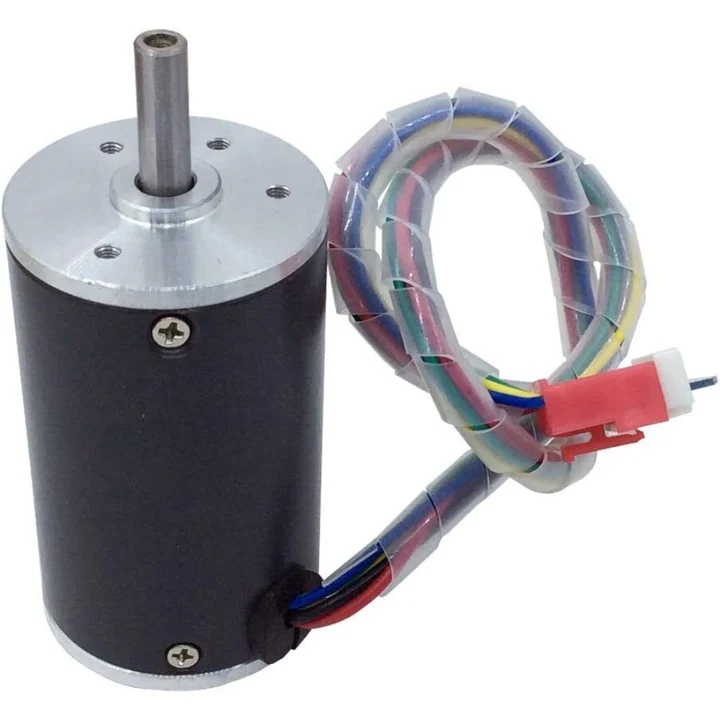
Let’s start with something as unassuming as the dc gear motor. You’ve probably seen one in a hobby kit or hidden inside an appliance, though you may not have realized what you were looking at. What makes it special is its marriage of torque and precision. A regular motor spins quickly but doesn’t offer much strength, while a gear motor slows things down just enough to add muscle to the equation. It’s like trading in a lightweight bicycle for a sturdy mountain bike—you won’t win any races, but you’ll climb hills without breaking a sweat.
I remember the first time I tinkered with one in a DIY project. It wasn’t glamorous. Just a simple little robot with wheels. But watching it move across the floor, clunky yet determined, was oddly satisfying. That tiny motor carried not just the toy but also a sense of possibility. These small, affordable components are often the backbone of prototypes, giving students, hobbyists, and even seasoned engineers a way to test ideas before they scale up. They’re unsung heroes, really, tucked away behind panels and casings, spinning faithfully for years.
Security That Feels Straight Out of Sci-Fi
Now, let’s swing to something entirely different—systems that feel like they’ve been plucked from a movie set. Picture a red beam of light stretching across a room, a sensor waiting for any disturbance. It’s hard not to think of heist films when someone whispers “trip the laser.” But beyond the Hollywood glamor, a laser alarm system is a very real, very practical piece of tech. Instead of a bulky motion detector, you’ve got something elegant and minimal, often capable of covering long distances with impressive accuracy.
The magic lies in its simplicity. Break the beam, and the system knows something’s up. Whether it’s guarding the perimeter of a warehouse or forming an invisible barrier at a restricted entry, it’s one of those inventions that makes you nod in quiet appreciation. Technology like this bridges the gap between imagination and real-world use. It’s both futuristic and everyday at once. And honestly, who hasn’t secretly wanted to wave a hand through a laser just to feel like they’re in an action movie?
Everyday Applications We Overlook
The funny thing is, both these technologies—the humble gear motor and the sleek laser sensor—tend to vanish into the background of our daily routines. They don’t demand attention, which is probably why we don’t notice them until something breaks. Think of elevators: a blend of gears, motors, and safety systems working in harmony. Or warehouses, where sensors and alarms keep products safe while automated trolleys glide along the floor powered by motors no bigger than a fist.
It’s easy to dismiss these as “just parts,” but they’re really building blocks of modern comfort and security. The coffee machine that grinds beans, the garage door that opens without a hitch, the office security system that silently watches over the place—they’re all testaments to engineering that doesn’t ask for applause.
Why It Matters to Care About the Details
Some people might shrug and say, “So what? It works, that’s enough.” But there’s a quiet joy in understanding the mechanics behind the curtain. Not just for engineers, but for anyone curious about the world. When you realize how much design and thought goes into something as small as a gear ratio or a laser beam’s alignment, you start seeing objects less as tools and more as stories. Stories of trial, error, innovation, and persistence.
And here’s the kicker: appreciating these details often changes how we treat them. You might oil that creaky motor instead of tossing the whole device. You might feel a flicker of trust in a security system, knowing it’s been tested for years to do its job without complaint. Caring about the details isn’t about becoming a gearhead—it’s about honoring the invisible threads that hold modern life together.
The Human Side of Technology
There’s also something deeply human about the way we interact with these systems. We design them to serve us, yes, but over time they start to feel almost alive. A door that slides open smoothly welcomes you in. A tiny robot powered by a motor feels like a pet with its own personality. A blinking red sensor at the end of a hallway makes you instinctively step back, respecting its invisible power.
It’s a reminder that engineering isn’t cold or distant. At its best, it has warmth—crafted by human hands and minds, designed to ease lives, protect spaces, or simply add a touch of wonder. That’s why I think more of us should pay attention to the small stuff. It’s not about memorizing specs or becoming a technician. It’s about noticing, really noticing, the marvels that hum quietly in the background.
Wrapping It All Together
So next time you press a button and watch a device spring to life, pause for a second. Somewhere, a motor is spinning, a sensor is watching, or a laser beam is stretching across space, all in service of your routine. We live in a world built not just by grand inventions but also by countless small innovations, layered together until they feel seamless.
The beauty of it all is that you don’t need to be an engineer to appreciate it. You just need to be curious, maybe even a little nostalgic for the days when you opened things up just to see what was inside. Because in that curiosity lies a kind of gratitude—for the machines that work tirelessly, for the people who design them, and for the quiet brilliance of everyday engineering.
And who knows? The next time you notice the faint whir of a motor or glimpse the glow of a laser, you might smile, knowing there’s a whole story tucked inside that simple, silent function.